The Role of Romania in the European Competitiveness Equation
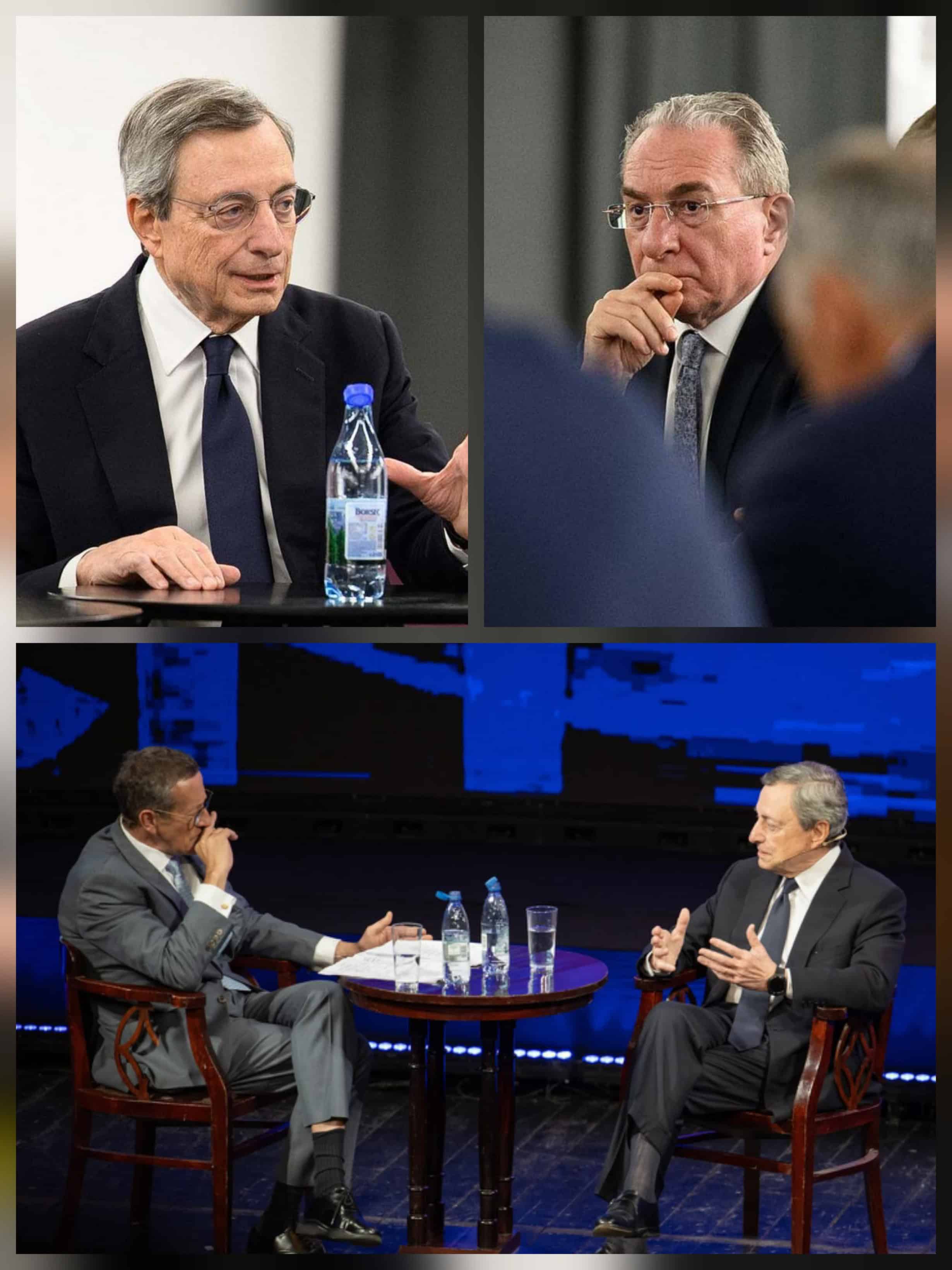
Mario Draghi at Tech Talks by UPT
The presence of Mario Draghi in Timișoara, as the central guest at the Tech Talks by UPT conference, marked an absolute premiere: the first official visit of the former head of the European Central Bank to Eastern Europe. I attended the dialogue organized by the Politehnica University of Timișoara with great interest, since it brought crucial nuances regarding how Romania`s role in the equation of European competitiveness is viewed from the peak of global technocracy.
The messages delivered by Mario Draghi in Timișoara described a Romania that “is not a small country” but rather an actor with major strategic resources, from the capital accumulated in private pension funds to energy resources and the potential of young engineers in artificial intelligence. However, beyond the diplomatic pleasantries, Draghi speech left a deep sense of abstraction. The former Italian prime minister acted more like an evangelist for his own report on competitiveness, launched in 2024. He applied a macro-European analytical framework over the local reality, using Romania as a convenient case study without delving into the deeper specificities or vulnerabilities of our economy.
When Draghi criticized the reliance on the banking system and called for the financing of innovation through the capital market, he was, in fact, reiterating his great thesis on the Capital Markets Union. When he spoke about energy, he viewed our Black Sea resources through the lens of the European Union`s collective security, rather than our concrete local infrastructure challenges. Mario Draghi thinks structurally, like a global
decision-maker for whom the continent is a single geopolitical entity. He did not come to Timișoara to propose a national strategy for our country, but to convince the Eastern European public that his macro diagnosis is valid for the entire European Union.
The major problem with this integrative vision lies precisely in the risk that European industrial policies could become a tool for subsidizing large Western corporations, while the East remains a mere consumer market and a source of highly skilled human capital.
In Draghi`s logic, the European Union is in direct geopolitical competition with the United States and China. From this top-down perspective, if a Franco-German giant like Airbus or a Dutch champion like ASML manages to dominate the global market, the whole of Europe wins, and we should all be happy because we are on the right track.
For Romania, this type of reasoning conceals a dangerous trap. In the absence of domestic industrial champions, we risk remaining mere second-tier suppliers. Top Romanian engineers will continue to work in local innovation centers, but the true profits, intellectual property, and strategic decisions will still be determined in Western European capitals, locking our country into the middle-income trap.
When Draghi urges us to move past banks and finance startups through pension funds, he passes the responsibility into our court, ignoring structural asymmetries. A Romanian startup cannot scale as quickly as a German one because it does not benefit from the same governmental fiscal space for subsidies, nor does it have access to venture capital funds worth billions of euros.
Draghi also pointed, albeit indirectly, to areas where Romania could gain an edge: building niche technology leaders in AI and cybersecurity and positioning itself as a regional anchor of energy security on the Eastern flank. Yet even if such critical infrastructure is developed domestically with European funding, it will not by itself resolve the long-term weaknesses of Romania’s domestic capital.
In conclusion, Draghi’s plan aims to strengthen the entire European industry, but it has a major blind spot: it does little to ensure that economic gains are shared fairly among member states. If Bucharest accepts these broad principles without firmly defending its own interests—such as protecting cohesion funds and requiring geographical balance in the new EU competitiveness programs that will back future industrial champions—Romania could end up using European mechanisms to finance the competitiveness of others. This is not a theoretical dispute; it is an active battle now being fought in Brussels during negotiations over the European Union’s next multiannual budget.